
Privacy Preference Center
More information
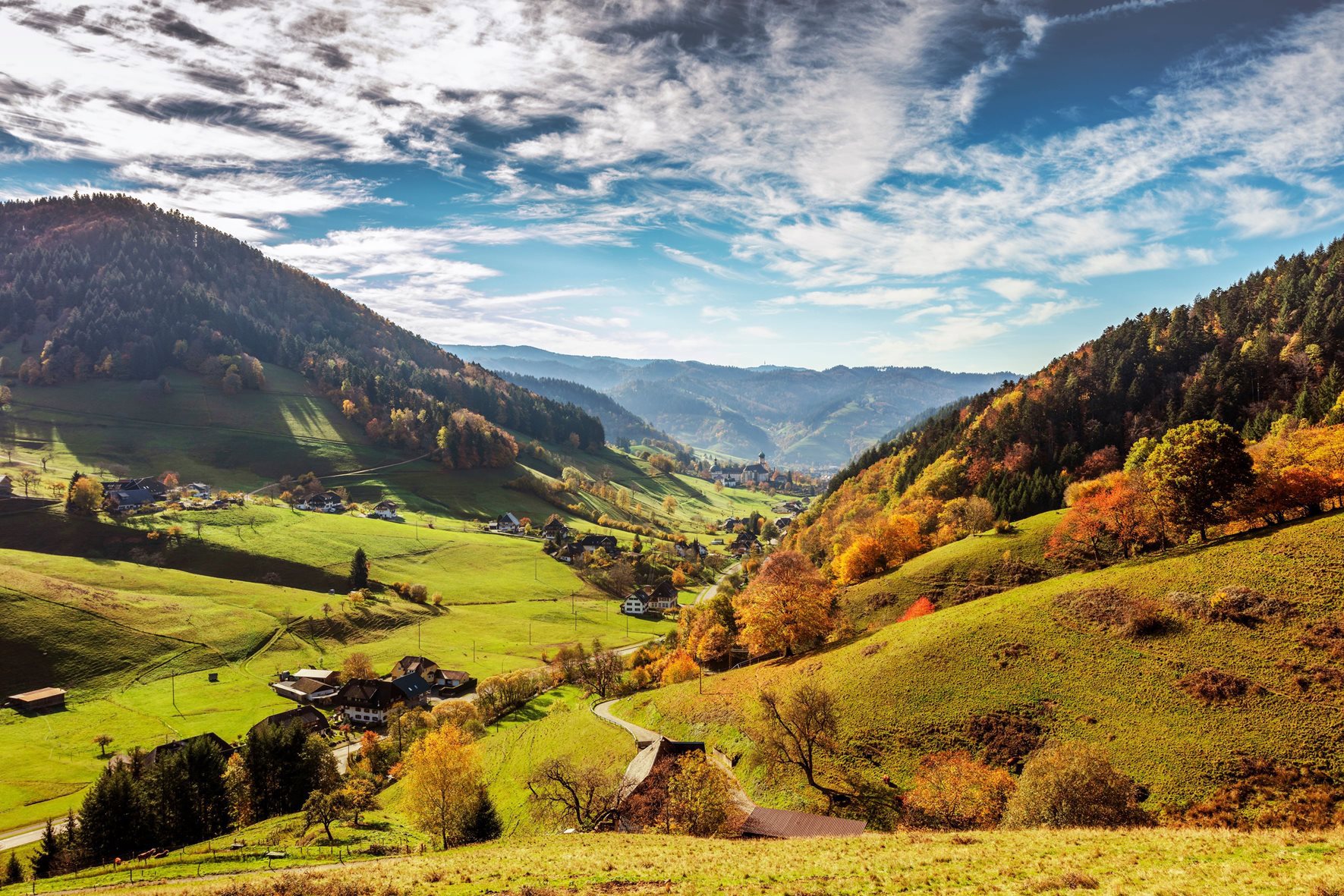
There’s more to this idyllic region than fairy tales and cuckoo clocks. Find time for an autumn break in the south-west of Germany.
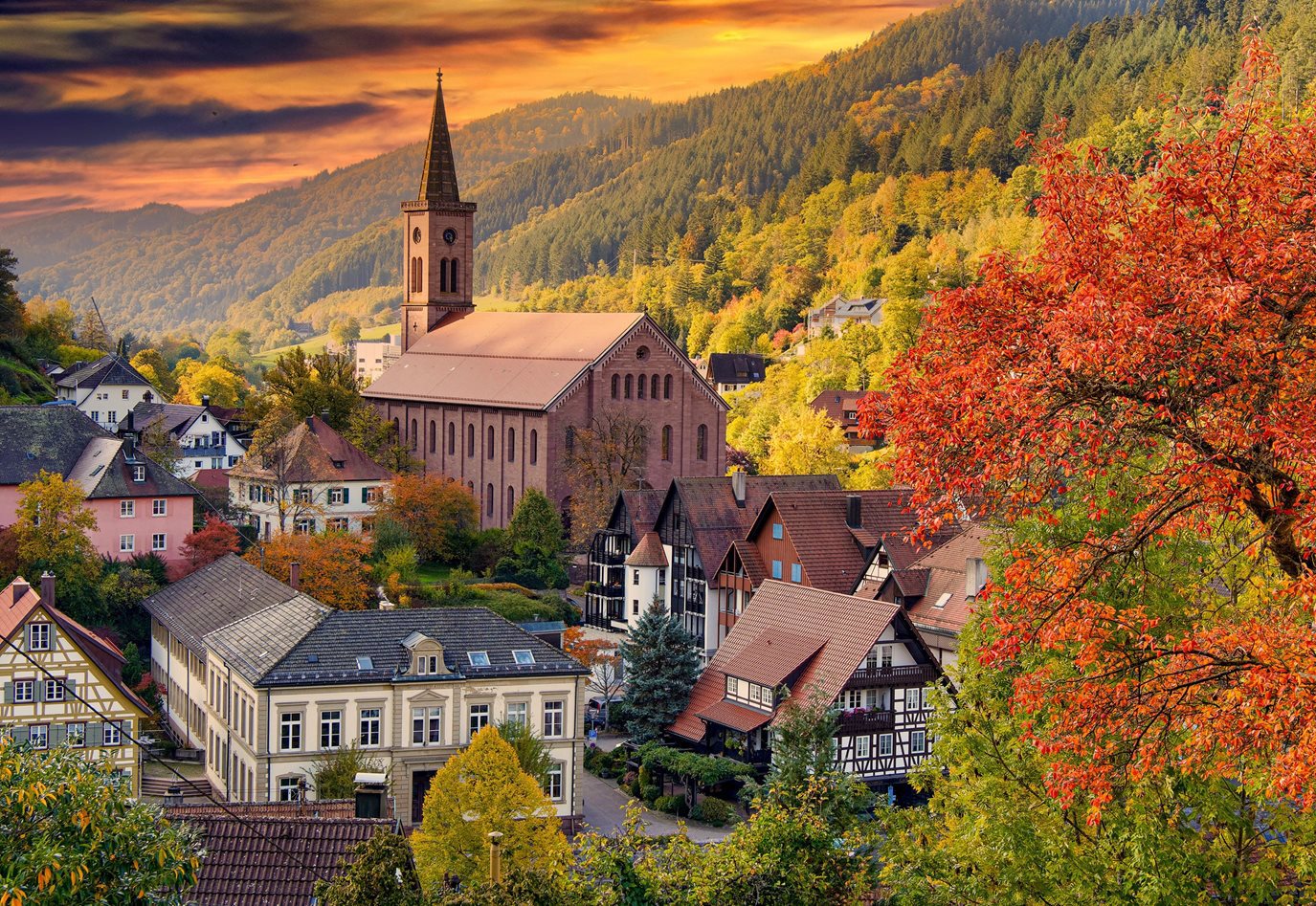
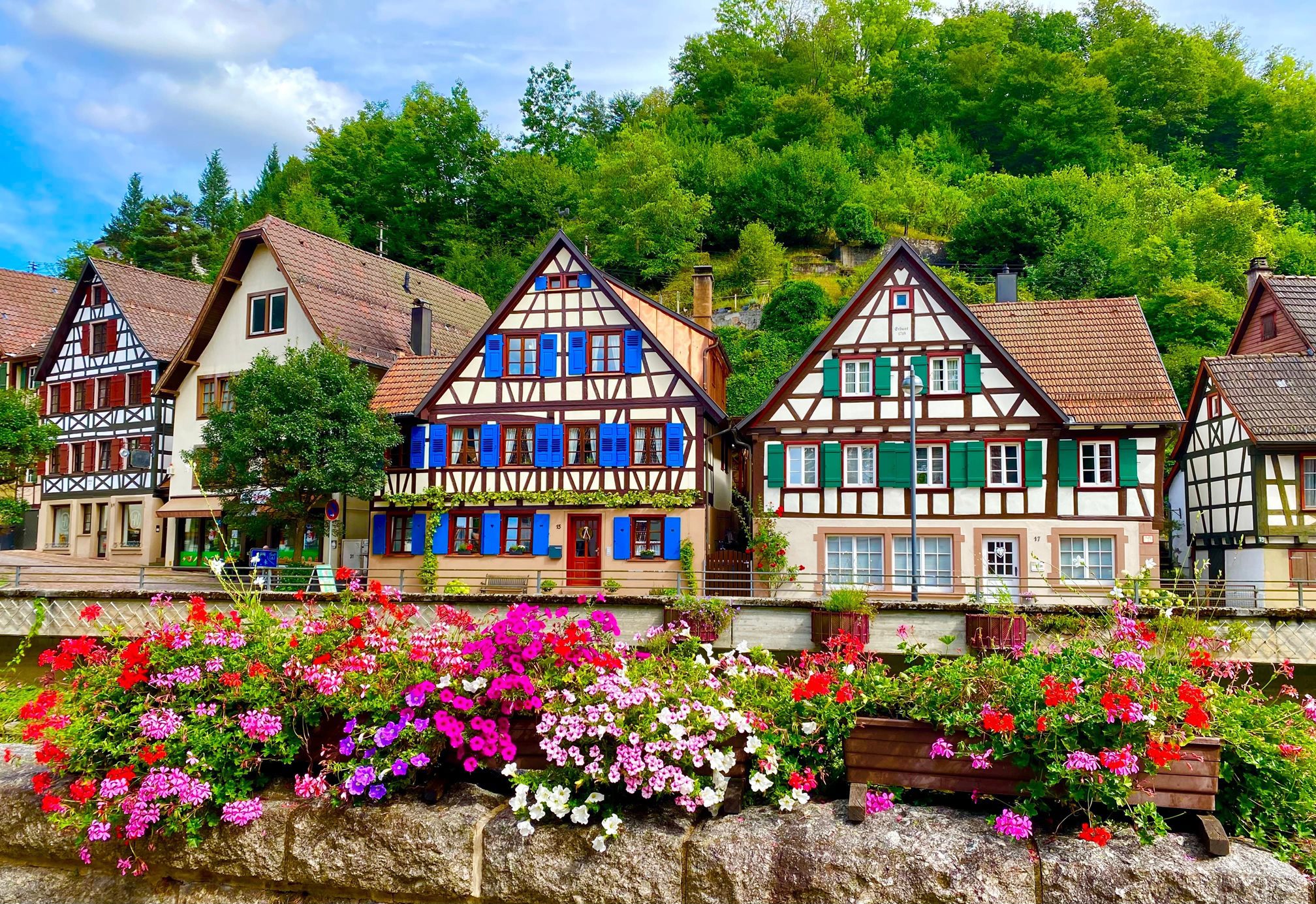
Driving through the Black Forest in autumn, you are spoilt for beautiful villages and small towns along the way. Some of the most breathtakingly picturesque are Schiltach and Gengenbach, with their half-timbered houses, cobblestone lanes and colourful shutters, nestling beneath forested mountainsides.
You’ll get all the fairy-tale feels here – fittingly in this region that inspired the Brothers Grimm, and where history and tradition has been so charmingly preserved. Elsewhere explore places like Triberg, with its spectacular waterfalls, and Baiersbronn, a collection of nine villages with an incredible food scene – its restaurants share multiple Michelin stars between them!
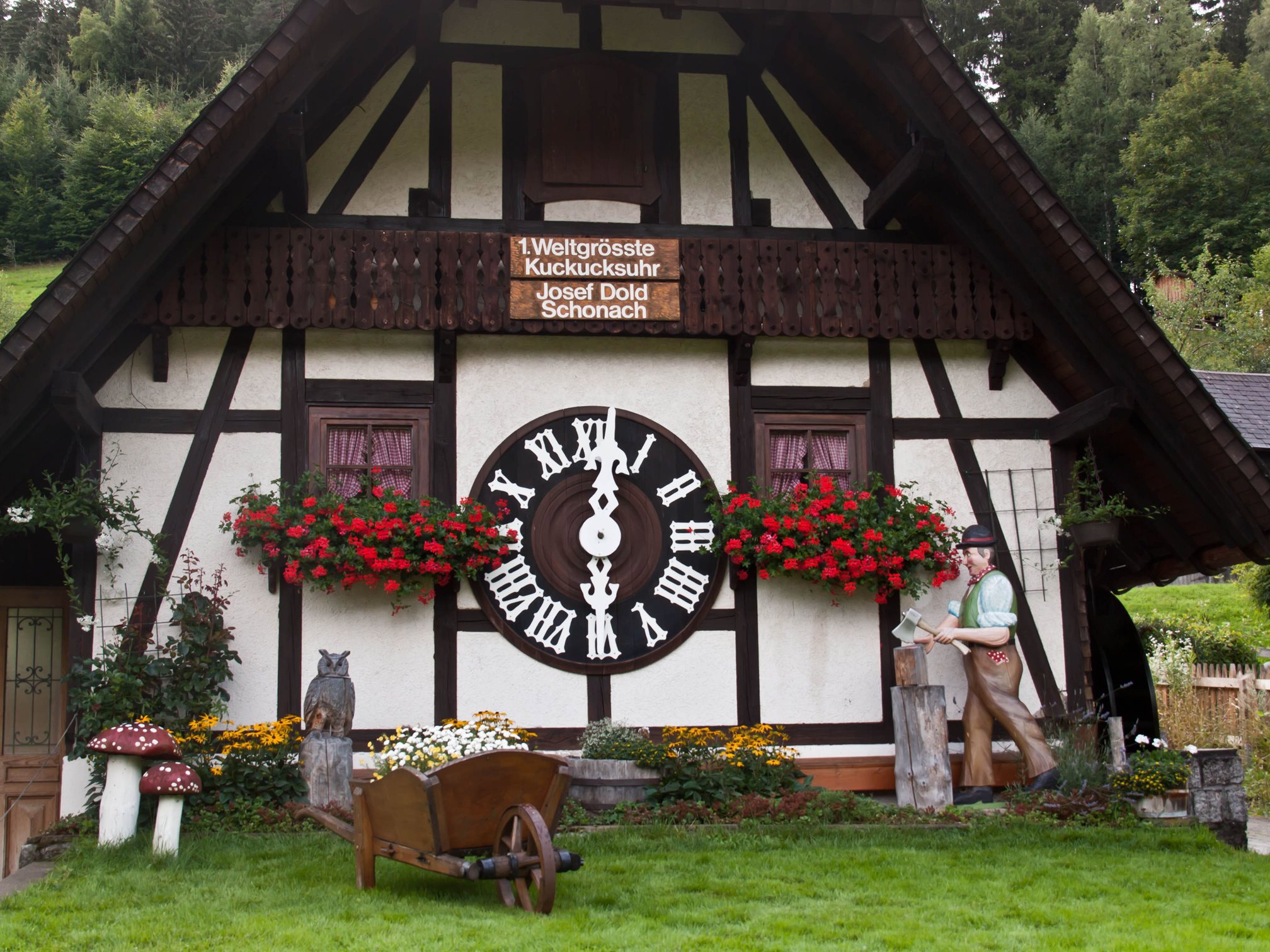
The Black Forest is the birthplace of the cuckoo clock. No one knows who invented the first one or where it chimed, but by the 18th century the Black Forest hills were alive to the sound of the mechanical wooden clocks.
The Clock Route (‘Deutsche Uhrenstraße’) is a circular driving route which visits places associated with the development of the cuckoo clock and watchmaking in general. Triberg is perhaps the ultimate clock town, boasting the world’s largest cuckoo clock (more a cuckoo house, in fact) which you can step inside; there are also museums of clockmaking at Villingen-Schwenningen and Furtwangen, and numerous factories, studios and museums dedicated to timepieces of all kinds.
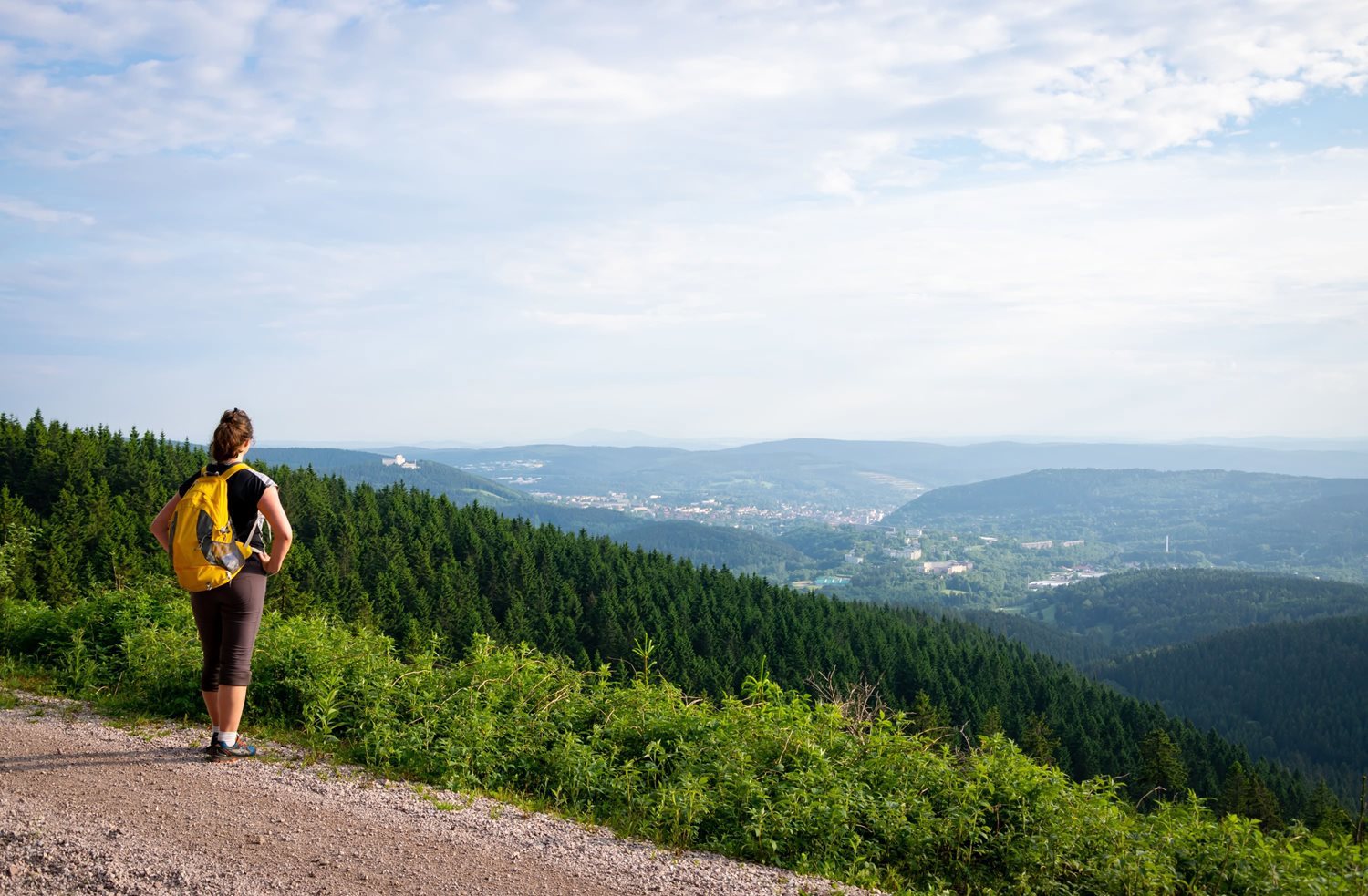
Germany’s first official hiking trails were established in the Black Forest and they remain among the most popular long distance routes for walkers. The Westweg, Mittelweg and Ostweg trails all start at the town of Pforzheim in the north of the region.
The Westweg runs for 290 km to Basel in Switzerland, and is split into day stages of around 20 km. It is mainly a high level route, giving walkers stunning views of the Rhine valley and the Vosges mountains in France. The Mittelweg is a slightly shorter, 230 km trail that runs southward, taking in highlights like the spa town of Bad Wildbad. The Ostweg is a 245 km route down the eastern side of the Black Forest, passing through the clock town of Villingen-Schwenningen, and traversing the peaks of the Randen mountains. For those seeking shorter walks, you’ll also find numerous day hikes or circular trails, all well waymarked. If you’re lucky you’ll get to see deer and wild boar, as well as a rich array of birdlife.
All aboard the Black Forest express! There are some wonderful heritage and steam services in the region.
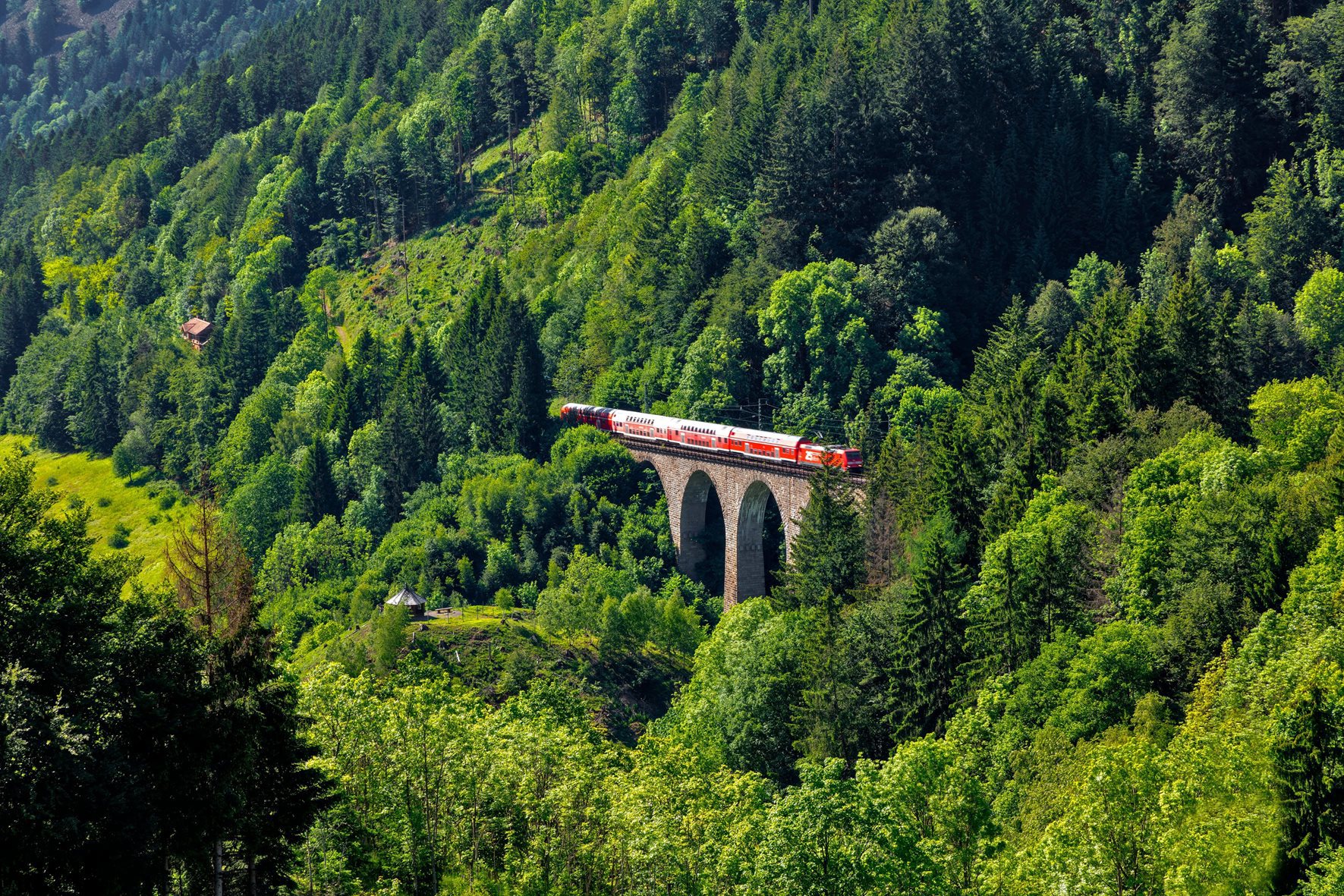
The ‘Schwarzwaldbahn’ (Black Forest Railway) runs from Offenburg to Singen, taking in the Kinzig valley, the Triberg waterfalls and the source of the Danube at Donaueschingen. Don’t be alarmed by the ‘Hell Valley Railway’ – the Höllentalbahn is so named because of the steepness of some of the sections, as it winds its undulating way through tunnels and over viaducts, through some of the more remote but spectacular parts of the Black Forest.
For steam enthusiasts there is a steam train service that operates on the ‘Dreiseenbahn’ (Three Lakes Railway), linking the lake resort of Titisee to the Windgfällweiher and Schluchsee reservoirs.
The Black Forest is one of the best places in Germany to see living and breathing local customs, crafts and traditions.
Whether it is the mountain chalets or traditional local dress, you’ll find Black Forest culture celebrated at several open air museums. The one at Vogtsbauernhof, right in the heart of the region, is a working village with houses, farms, gardens and workshops, built around the original farmhouse dating from 1612. If you’re visiting in the autumn, please be aware that the Vogtsbauernhof museum is only open until early November.
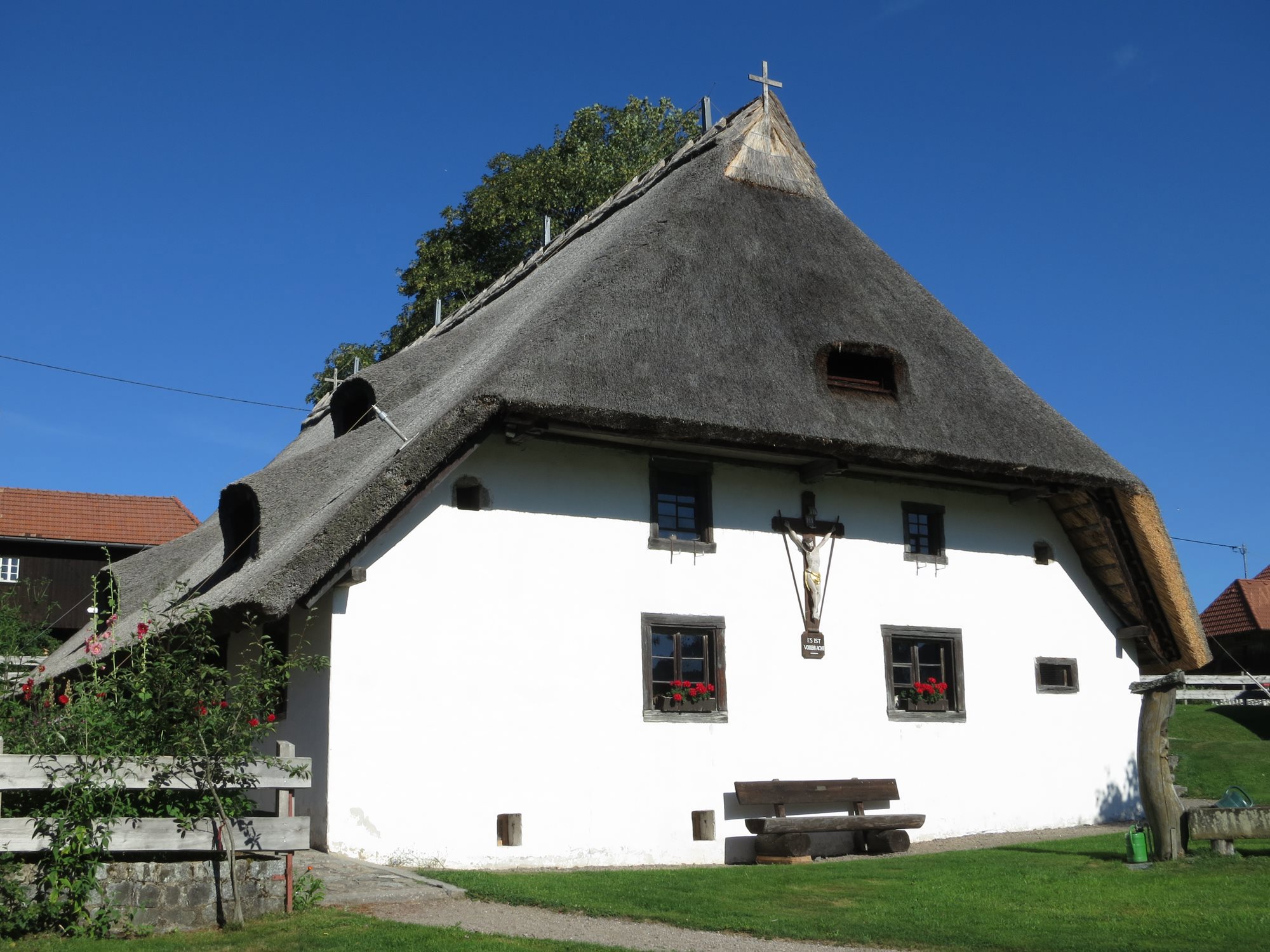
The Klausenhof Open Air Museum (pictured, right) in the south of the Black Forest region offers a unique experience for visitors, with demonstrations of the way people lived and worked, all set around the thatched chalet built in 1424, making it one of the oldest surviving original buildings in the Black Forest. The Klausenhof museum, in the town of Herrischried, is open all year round, but closed on Mondays and Wednesdays.
(image credit: Stefan Karl, CC BY-SA 3.0, via Wikimedia Commons)
What’s the cherry on top of the Black Forest gateau? Surely having a spa day at one of the many resorts and hotels around this enchanting region.
The gateway to the Black Forest, Baden-Baden, is home to natural healing waters that spring up from a depth of 2,000 metres. You can bathe in the thermal waters at the Caracalla Spa and the Friedrichsbad Spa. Caracalla offers a more modern bathing experience, with saunas, steam baths, massages and wellness treatments, while Friedrichsbad, opened in 1877, is like bathing in a Roman temple! It’s a relaxing sort of place. Mark Twain said that when visiting Friedrichsbad, ‘after 10 minutes you will forget the time and after 20 minutes the world’.
Don’t forget, however, to check in at Lake Titisee, the pleasure resort that has grown up around the glacial lake in the south of the Black Forest. Badeparadies Schwarzwald is the spa attraction here – take your pick from a huge array of pools, saunas, massage lounges and a family-friendly water park.

All Consent Allowed